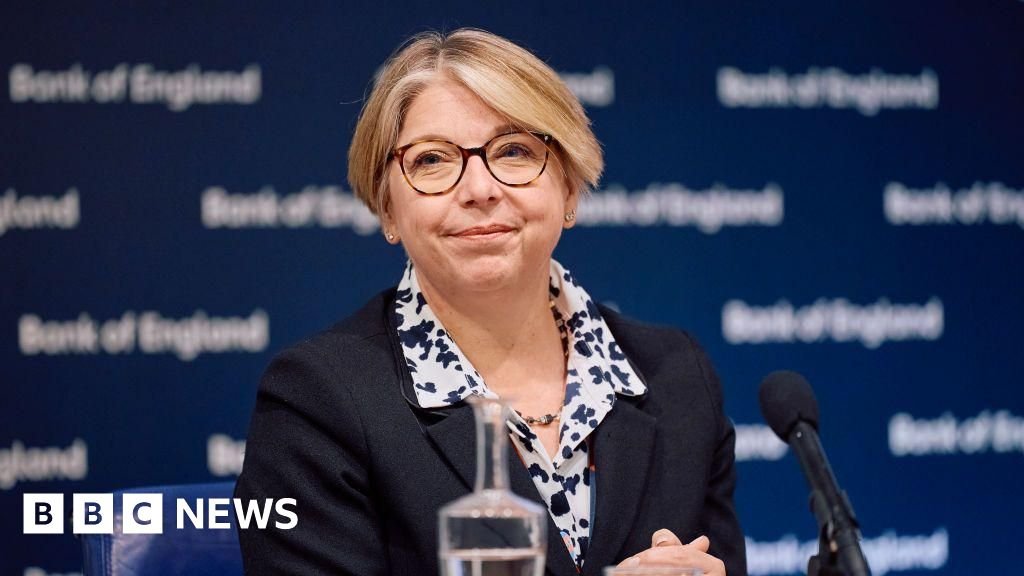
Stock markets are too high and set to fall, says Bank of England deputy
The Bank of England anticipates a global decline in stock markets, as current share prices fail to account for the numerous risks facing the world economy, the institution’s deputy governor has informed the BBC.
Sarah Breeden stated: “There’s a lot of risk out there and yet asset prices are at all-time highs. We expect there will be an adjustment at some point.”
It is rare for a high-ranking official at the Bank to speak so candidly regarding market performance.
Breeden, who also serves as the Bank’s head of <a The thing that really keeps me awake at night is the likelihood of a number of risks crystallising at the same time – a major macroeconomic shock, confidence in private credit goes, AI and other risky valuations readjust – what happens in that environment and are we prepared for it?" she said.
A significant drop in equity markets can have various economic consequences. If households hold shares, a decrease in their value may lead to a sense of diminished wealth, potentially causing individuals to reduce their spending.
Furthermore, it can complicate efforts for businesses to secure funding, which might lead to the delay or cancellation of investments. Declining markets can also erode confidence, potentially prompting companies to scale back on hiring.
The US stock market, home to the world’s largest corporations, has recently reached a series of record highs despite warnings from the International Energy Agency that the global economy is confronting its most severe energy shock in history.
Technology firms have invested hundreds of billions of dollars into AI infrastructure. Microsoft founder Bill Gates has described the influx of capital into this sector as “a frenzy,” with some observers drawing parallels to the late 1990s dotcom bubble, during which concerns.
Another area of concern involves the expansion of funds that operate similarly to banks by providing private loans to businesses. These entities have recently experienced losses and have been forced to limit investor withdrawals, raising alarms about potential vulnerabilities within the financial system.
Breeden noted that the massive growth of this “shadow banking” sector has yet to be tested by a market downturn.
“Private credit has gone from nothing to two-and-a-half trillion dollars in the last 15 to 20 years. It hasn’t been tested at this scale with the degree of complexity and interconnections it has with the rest of the financial system so far,” she said.
“It’s a private credit crunch, rather than a banking-driven credit crunch, that we’re worried about.”
While the UK stock market lacks the specific types of AI companies that have propelled US markets to record levels, the FTSE 100 index remains within 5% of its own all-time high.
Breeden emphasized that her role is not to forecast the timing or scale of a market decline, but rather to ensure the financial system is prepared for such an event.
“What we are watching for: is how might those prices fall? Will there be a sharp adjustment downwards? And if there is such an adjustment, how will that affect the economy? I’m not saying it will happen today, tomorrow, in 12 months’ time. It’s ensuring that if it happens the system is resilient.”
Russ Mould, investment director at AJ Bell, noted that it was “unusual for a Bank of England official to explicitly warn about a potential stock market pullback”.
The issues raised by Breeden have been “worry points” for the market in recent months, he observed, yet despite these anxieties, “markets have wobbled and then regained their poise”.
“That suggests investors aren’t blind to potential problem areas, instead it implies they’re comfortable with the risks and that they believe any problems can be contained.”