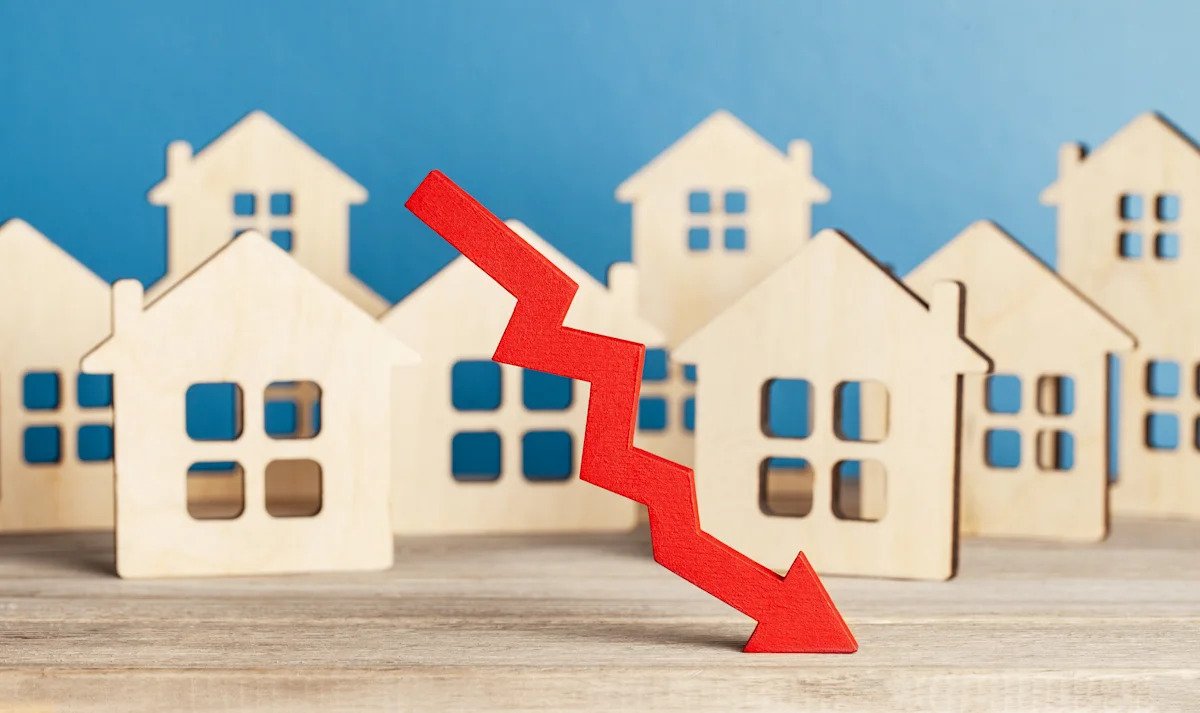
Economists do not anticipate a collapse in the housing market, though concerns regarding home buying persist as the affordability crisis continues to intensify.
The 10-year Treasury yield is hitting highs not seen in a quarter-century, and mortgage rates are nearing 8%. While home prices keep climbing and inflation remains stubbornly high, the national economy and employment levels stay stable. With that in mind, what does 2026 hold for the housing sector?
Is the housing market going to crash soon?
Generally, experts do not expect a housing market crash in 2026, and recently passed legislation could help support the real estate sector.
“The U.S. housing market faces a deepening affordability crisis that is driving home ownership further out of reach for many consumers,” a recent J.P. Morgan real estate market outlook stated. “To this end, Congress recently passed the 21st Century ROAD to Housing Act in July — a bipartisan piece of legislation that aims to reduce housing costs and increase housing supply.”
However, the provisions of this bill will not go into effect until January 7, 2027.
Another factor in the changing housing landscape is that sellers currently outnumber buyers. Redfin reported that in August, the volume of owners listing properties was 58% higher than the number of active buyers. This represents the widest gap between buyers and sellers since data collection began in 2013.
“Even during a time when housing costs are elevated, the surplus of sellers over buyers makes it a good time to be a house hunter, in some respects,” Asad Khan, a senior economist at Redfin, said in a release.
Nevertheless, the analysis pointed out that this is only a buyer’s market for those who have the <a High housing costs and widespread economic uncertainty have caused many would-be buyers to back off in recent years, creating the imbalance of buyers and sellers we see today," Redfin reported.
What about jobs data?
The labor market has remained resilient. Private-sector employment <a It's a strong report," said Dr. Nela Richardson, chief economist at ADP. "After a three-month slowdown, job creation rebounded and pay growth remained solid."
The latest economic assessment of the U.S. economy from UCLA Anderson, published on September 30, described a nation that has “proved surprisingly resilient through a series of shocks.”
“The tariff increases that dominated the outlook in late 2025 were followed by the war in Iran and a sharp increase in oil prices in the spring. Despite those disruptions, underlying economic growth has remained around or above 2%,” the report noted.
The analysis anticipates that the labor market will stabilize, with the unemployment rate holding near 2%.
Consequently, the job market appears healthy enough that a housing crash is not expected in the near future.
Home prices continue to slowly rise
Annual growth in U.S. home prices rose by just 1.4% in July, according to the real estate data firm Cotality.
“While prospective buyers may feel squeezed by volatile mortgage rates, slower home price appreciation should gradually help ease affordability pressures — especially if wage growth remains consistently stronger,” Dr. Selma Hepp, Cotality’s chief economist, said in an analysis. “As we move through the remainder of the year, local labor market dynamics and affordability constraints will continue to shape housing market performance as much as broader macroeconomic shifts, especially the direction of mortgage rates.”
Housing market crashes: Supply and demand dynamics
For a housing market crash to occur, supply and demand would need to be significantly misaligned in favor of supply. Although supply is currently tight, the disparity is not as extreme as it was in 2008. As of August 2026, the U.S. Census Bureau reported a housing supply of 8.5 months.
“In a normal market balanced between buyers and sellers, we would have a six-month supply of homes,” said Rick Sharga, founder and CEO of CJ Patrick Co., a market intelligence firm for real estate and mortgage companies. For comparison, the buildup to the 2008 financial crisis led to a drastic oversupply — 13 months.
The National Association of Realtors indicated that affordability improved in August for the second consecutive month, following a five-month period of decline.
Housing crisis lessons for today
The housing collapse that began in 2007 and fueled the global financial crisis remains a major concern for many consumers and economists. However, the conditions that triggered that event are not present today. Beyond the differences in home equity and supply levels, the mortgage industry has fundamentally changed.
“Lending practices have tightened significantly since 2007, making for a wildly different scenario today than we faced back then,” David Gottlieb, a wealth advisor at Savvy Advisors, said.
The era of zero-down payments and low- or no-documentation loans for everyone is over. Lenders now require buyers to have a financial stake in the property. The lowest down payments are typically found with VA loans, which require zero down, and FHA loans, which allow for down payments as low as 3.5%. Both programs still mandate verification of income, assets, and employment.
With subprime products eliminated and most lenders requiring down payments, modern homeowners possess significantly more equity than those in the early 2000s. The average American now holds just over $310,000 in home equity, providing sellers with the flexibility to lower prices to finalize a sale.
“When comparing the financial health of the consumer and banking industry between 2008 and today, we truly are looking at apples and oranges,” Gottlieb said.
Signs of a housing market crash
Whether you are tracking the value of your home or looking to purchase, you may want to monitor indicators of a potential market downturn. An economic shock, such as a major <a While a national housing crash remains very unlikely, every market is unique, and some are likely to see prices go down even as the national numbers are going up — probably not enough to designate it as a 'crash,' but enough to make a difference for some homeowners," Sharga said.
What a housing market crash could mean for home buyers
A market crash presents a complicated situation for buyers. Such events are usually accompanied by other negative economic outcomes, such as job losses. Even if home prices fall, rising unemployment could make it harder for many Americans to qualify for a mortgage.
Conversely, some buyers might view a crash as an opportunity. Lower prices could allow those who are steadily employed and have saved money to secure more affordable housing.
What a housing market crash could mean for sellers
During a housing crash, homeowners who are not forced to sell might choose to wait until values recover. Being “underwater” on a mortgage—owing more than the property is worth—does not immediately affect your finances, as many discovered during the previous crisis.
However, if you must sell your home, you might need to consider more aggressive pricing. Buyers during a crash are searching for deals, which could result in lower profits than you originally expected.
How to prepare for a potential housing market crash
If you are concerned about the possibility of another housing crash, there are steps you can take to safeguard your financial health.
Build an emergency fund. Experts suggest keeping three to six months of living expenses in a savings account.
Pay down your debt. Try to prioritize high-interest obligations, such as credit card balances.
Buy within your budget. Regardless of market conditions, it is always prudent to secure a mortgage payment that you can comfortably afford.
Make extra mortgage payments. Even small, additional monthly payments can help you build home equity more quickly.
Choose a fixed-rate mortgage. Benefit from a consistent payment and avoid concerns about rising rates; a fixed-rate mortgage remains locked in regardless of real estate market fluctuations.
Housing market crash FAQs
Have house prices fallen in 2026?
While some specific markets have experienced slight declines, home prices nationally have seen a modest increase so far this year. The most recent data from Cotality indicates that annual home prices were up 1.4% in July.
Is 2026 a good year to buy a home?
The best time to purchase a home is when it aligns with your specific financial situation. For some, 2026 may be a good time to buy if their income, debt levels, and employment status support the necessary mortgage payments. For others, 2026 might be better spent paying down debt and saving for a down payment to qualify for better rates in the future.
Are mortgage rates going down in 2026?
Economists anticipate that mortgage rates will hover in the high-6% range by the end of 2026 and remain near that level throughout the following year.