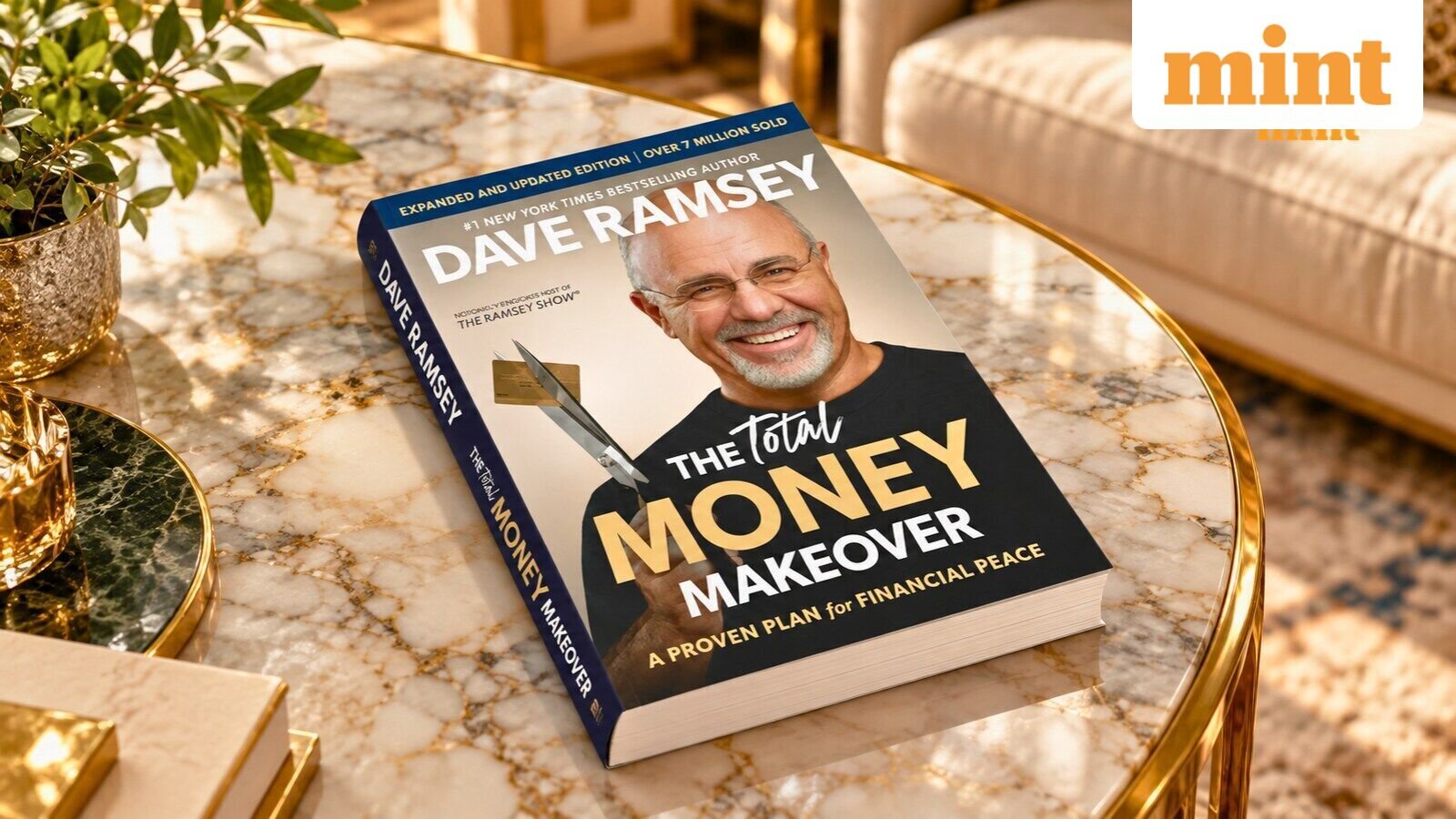
Dave Ramsey’s financial plan emphasises habits over income. Check these 5 lessons from ‘The Total Money Makeover’, an international bestseller.
A higher income cannot fix a financial situation managed by poor habits. This is the core message of Dave Ramsey’s popular book, The Total Money Makeover.
His strategy prioritizes personal discipline and decision-making over complex calculations. He contends that effective money management begins with a fundamental shift in behavior.
Keep an emergency fund
The first principle is to maintain an emergency fund. Think of it as a protective shield against unexpected financial storms. A sudden car repair or a minor medical expense should not force you to take on debt.
Ramsey recommends starting with $1,000, or an equivalent local reserve. This safety net prevents unforeseen costs from turning into credit card balances or high-interest loans. In India, for example, this might equate to ₹25,000 when considering purchasing power parity. It is a vital starting point.
Snowball method
Next, focus on eliminating debt using the snowball method. List your debts in order from the smallest balance to the largest. consumer debt, it is time to bolster your emergency savings. Your initial safety net should now evolve into a more robust foundation. Aim to save enough to cover three to six months of essential living expenses.
This larger reserve provides security during events like job loss or significant medical emergencies. It safeguards your financial progress and minimizes the need to rely on credit in the future. True financial stability involves preparing for lean months while managing your daily cash flow.
Watch your financial behaviour
The fourth lesson shifts the focus from bank balances to personal habits. Ramsey suggests that personal finance is 80% behavior and only 20% knowledge or math. Understanding interest rates is of little use if impulsive spending continues to deplete your income.
Purchasing items to impress others can make even a substantial salary feel insufficient. Daily self-discipline is more important than memorizing financial jargon. Your spending habits should support your long-term objectives rather than work against them.
Future planning
Finally, use your newfound financial breathing room to plan for the future. After securing your emergency fund and eliminating debt, turn your attention to retirement and building lasting wealth. Under Ramsey’s framework, a modest home mortgage is acceptable.
He advocates for investing a consistent portion of your income. Retirement accounts, index funds, and growth-oriented investments are key components of this phase. Setting up automatic contributions helps ensure consistency, while patience remains essential for the long-term journey.
These lessons outline a clear path from financial stress toward independence. Start by protecting yourself, reducing debt, increasing your savings, and practicing disciplined spending. Then, invest steadily to meet future needs and ensure family security. Ramsey’s message is straightforward: sustainable financial growth stems from repeated, sensible choices. The transformation begins with your habits, long before it shows up in your bank account.