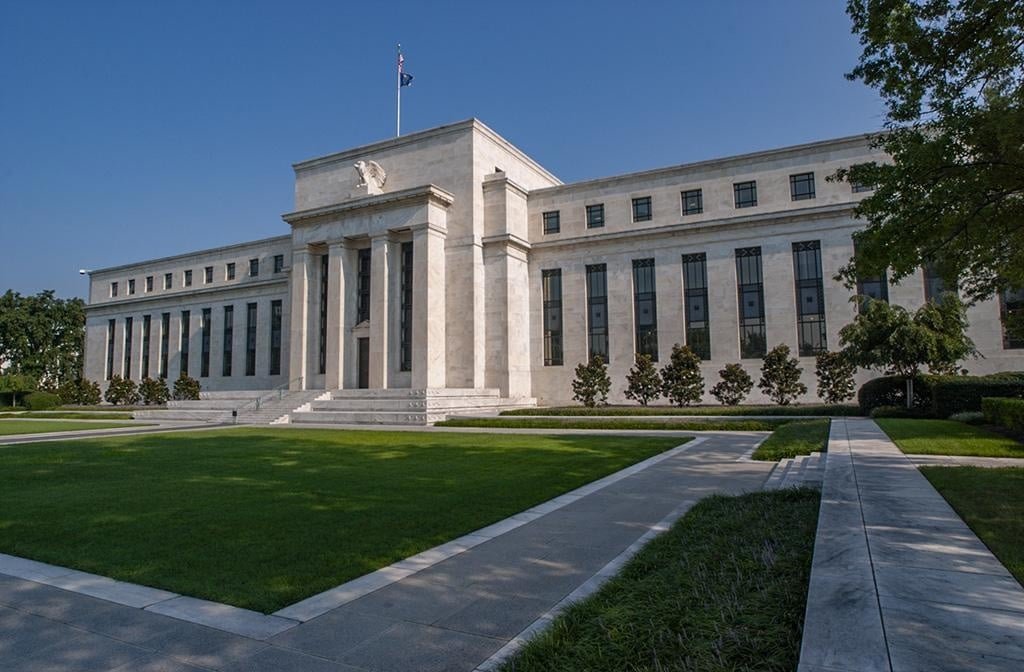
Two Fed officials continue to advocate for raising interest rates to control financial markets.
She argued that raising interest rates gradually also helps the Fed avoid the risk of a slow response to price pressures, which could lead to a prolonged acceptance of high inflation in the economy. This is a worrying risk because when businesses and consumers believe that prices will continue to rise rapidly, pricing behavior and wage demands could make inflation more difficult to control.
Hammack’s stance is not a new signal of tightening. At the end-of-October meeting, the Fed decided to keep the policy interest rate range unchanged at 3.75-4.00%, but Hammack and Fed Governor Lisa Cook voted against it, supporting a rate hike. She had previously opposed the decision to keep interest rates unchanged at the end of July.
The Cleveland Fed president has consistently argued that monetary policy and financial conditions in general have not been tight enough to curb economic activity and bring inflation back under control. Inflation has exceeded the Fed’s 2% target for more than half a decade, therefore further increases in short-term borrowing costs are necessary to ease pressure on prices.
Hammack’s view in favor of a gradual interest rate hike is also shared by Richmond Fed President Thomas Barkin. Speaking in Charlotte that same day, Barkin stated that inflation remains “too high” and is staying high instead of cooling down. According to him, for monetary policymakers, “the policy implications are quite clear.” Regarding the pace of future interest rate increases, he commented that “gradual adjustments are reasonable.”
This statement is also consistent with Mr. Barkin’s assessment in the October 30 interview, when he emphasized that demand in the economy remains strong and the unemployment rate is relatively low. This allows the Fed to continue prioritizing inflation control, while also having time to observe the impact of each interest rate adjustment.
Although both support tightening, the two officials have differing viewpoints. Ms. Hammack is particularly concerned that the policy is not restrictive enough and expects inflation to become uncontrollable. Meanwhile, Mr. Barkin emphasizes determining the appropriate pace of increase, avoiding rapid adjustments while the Fed still has time to assess economic data.
Why has the market lowered its expectations for interest rate hikes?
While two Fed officials continued to signal tightening, US financial markets on November 5th witnessed a sharp sell-off, focused on technology and AI-related businesses.
At the close of trading, the Nasdaq index fell approximately 5.5%, the S&P 500 lost 4.4%, and the Dow Jones declined 3.4%. The Nasdaq officially entered correction territory after losing more than 10% from its recent peak set a month ago. The decline reflects concerns about the outlook for AI investment, stock valuations, and the potential for expanding data centers.
The shift of funds towards US Treasury bonds caused the yield on 2-year Treasury bonds to fall by 10.4 basis points, to around 4.48%, the lowest since September 9th. This maturity is particularly sensitive to expectations of short-term interest rates from the Fed.
According to Reuters, the market probability of the Fed raising interest rates at its December 8-9 meeting has fallen to around 70%, from over 80% on November 4. This development stems primarily from two factors. First, as stocks fall sharply, investors increase their demand for safe-haven bonds, pushing bond prices up and yields down. Second, the market is beginning to reassess the ability of the US economy to maintain strong growth if investment in the AI sector declines.
Concerns have increased following the US midterm elections, when the Democratic Party gained control of Congress and opposition to data center development has intensified in some localities. If this investment slows down, demand for equipment, energy, and construction could decrease, thereby helping to ease inflationary pressures.
Analysts at Evercore ISI believe that licensing hurdles could slow AI investment in major states, reducing the risk of an overheated economy in the next one to two years. This could help maintain a balance between aggregate demand and aggregate supply without the need for further interest rate hikes.
Meanwhile, TD Securities still forecasts a total Fed increase of 0.5 percentage points between now and early 2027. “If the midterm election results contribute to an end to the war in Iran and/or lead to a decrease in investment in AI, the Fed may not need to further tighten monetary policy after March next year,” the firm added.
The next test is the US October jobs report, scheduled for release on November 6th. A Reuters survey shows economists forecasting the economy will add around 65,000 jobs, with the unemployment rate remaining at 4.2%. If the jobs figures exceed forecasts, expectations of interest rate hikes could recover. Conversely, clear signs of weakness would reinforce the view that the Fed needs to be more cautious.