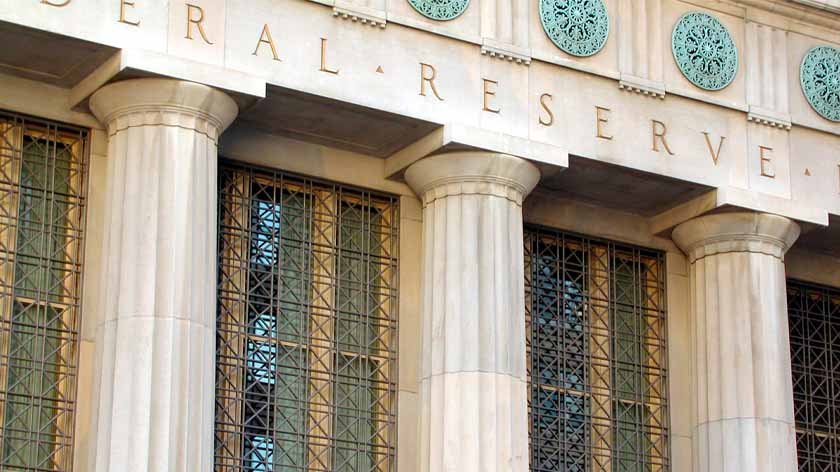
Fed raises interest rates to 3.75%-4.00% in first inflation.
During his third post-meeting press conference as Fed Chair, Kevin Warsh reaffirmed his commitment to bringing <a s credibility. Furthermore, he has expressed reservations regarding forward guidance, citing the risk that it may lock policymakers into specific paths despite shifting economic data, and he has launched task forces to review Fed practices concerning data, communication, and balance sheet management.
Warsh reiterated these priorities during his September 16 press conference, stressing the necessity of returning inflation to the 2% level. In recent public remarks, he noted the broad nature of current inflation, stating, “too many categories are still posting increases above 3%.” He also opted not to provide responses for the Fed’s Summary of Economic Projections, characterizing the practice as a form of forward guidance. Updated median projections from the Fed—excluding Warsh—point to one more rate hike this year, slightly more optimistic growth forecasts for 2027, and stable inflation expectations for next year compared to June estimates, though there is a slight increase in inflation projections for 2028. While the official policy statement remained largely consistent with the previous meeting, it included new language noting that “domestic spending remained resilient.”
While interest rate hikes throughout 2022 and 2023 were effective in tempering inflation over the last four years, climbing oil prices are once again pushing up near-term costs. The Core Personal Consumption Expenditures (PCE) Price Index rose from 3.0% in December 2025 to 3.3% in July 2026. Front-month futures for West Texas Intermediate crude oil climbed from approximately $57 per barrel at the start of the year to a high of $113 in April. After a period of decline, prices have recently moved back above $100. These elevated energy costs have served as the primary catalyst for increased rate hike expectations and higher Treasury bond yields. Longer-term inflation expectations remain stable, as investors believe the Fed’s rate increases will eventually bring inflation under control.
Federal Reserve balance sheet and market liquidity
In December 2025, the Fed ceased the reduction of its bond holdings and began purchasing short-term Treasury bills to ensure sufficient reserves within the banking system and to keep short-term rates aligned with its policy target. Currently, the Fed’s bond portfolio is approximately $6.6 trillion, down from a peak of nearly $9 trillion in 2022. The Fed scaled back its regular purchases this year, and the balance sheet has seen minimal growth since Warsh took office. By purchasing Treasury bills to expand the balance sheet, the Fed can bolster market liquidity by absorbing some of the additional supply. Liquidity—the capital available for purchasing goods, services, and financial assets—also helps protect markets from unexpected shocks, and current liquidity levels remain stable. Warsh has voiced doubts regarding the long-term effectiveness of this approach and its suitability as a policy tool, having established a task force to investigate the matter further.
Two-year Treasury yields climbed 0.08% to 4.74% today as the outlook for further rate hikes solidified. Ten-year Treasury yields increased 0.02% to 5.02% compared to the previous day’s close. Both large-cap stocks, tracked by the S&P 500, and small-cap stocks, tracked by the Russell 2000, saw a decline of 0.5%.
While global central banks generally eased policy throughout 2025, many have begun raising rates this year to combat rising energy costs. Both the European Central Bank and the Bank of Japan implemented rate hikes in 2026, with further increases expected. Investors are also bracing for potential rate moves from the Bank of England and the Bank of Canada later this year.
Maintaining a constructive outlook amid market uncertainty
We maintain a positive outlook for diversified portfolios and identify potential in growth-focused areas, such as U.S. equities, global infrastructure, and structured credit. Although rising energy prices pose a risk to inflation and could potentially slow economic activity, corporate earnings and consumer spending remain strong, bolstered by fiscal measures like reduced corporate and individual taxes and recent tariff rebates. Maintaining a diversified portfolio across various asset classes can help mitigate the impact of volatility on individual holdings. We will continue to provide updates as new information becomes available and as we refine our market assessments.
We value your trust and are available to assist you. Please reach out if we can provide support regarding your specific financial circumstances.
This information represents the opinion of U.S. Bank. The views are subject to change at any time based on market or other conditions and are current as of the date indicated on the materials. This is not intended to be a forecast of future events or guarantee of future results. It is not intended to provide specific advice or to be construed as an offering of securities or recommendation to invest. Not for use as a primary basis of investment decisions. Not to be construed to meet the needs of any particular investor. Not a representation or solicitation or an offer to sell/buy any security. Investors should consult with their investment professional for advice concerning their particular situation. The factual information provided has been obtained from sources believed to be reliable but is not guaranteed as to accuracy or completeness. U.S. Bank is not affiliated or associated with any organizations mentioned.
Based on our strategic approach to creating diversified portfolios, guidelines are in place concerning the construction of portfolios and how investments should be allocated to specific asset classes based on client goals, objectives and tolerance for risk. Not all recommended asset classes will be suitable for every portfolio. Diversification and asset allocation do not guarantee returns or protect against losses.
Past performance is no guarantee of future results. All performance data, while obtained from sources deemed to be reliable, are not guaranteed for accuracy. Indexes shown are unmanaged and are not available for direct investment. The S&P 500 Index consists of 500 widely traded stocks that are considered to represent the performance of the U.S. stock market in general. The Russell 2000 Index measures the performance of the 2,000 smallest companies in the Russell 3000 Index and is representative of the U.S. small capitalization securities market. The Personal Consumption Expenditures (PCE) Price Index is a measure of the prices that people living in the United States, or those buying on their behalf, pay for goods and services. It is known for capturing inflation (or deflation) across a wide range of consumer expenses and reflecting changes in consumer behavior.
Equity securities are subject to stock market fluctuations that occur in response to economic and business developments. International investing involves special risks, including foreign taxation, currency risks, risks associated with possible differences in financial standards and other risks associated with future political and economic developments. Investing in emerging markets may involve greater risks than investing in more developed countries. In addition, concentration of investments in a single region may result in greater volatility. Investing in fixed income securities are subject to various risks, including changes in interest rates, credit quality, market valuations, liquidity, prepayments, early redemption, corporate events, tax ramifications and other factors. Investment in debt securities typically decrease in value when interest rates rise. This risk is usually greater for longer-term debt securities. Investments in lower-rated and non-rated securities present a greater risk of loss to principal and interest than higher-rated securities. Investments in high yield bonds offer the potential for high current income and attractive total return but involve certain risks. Changes in economic conditions or other circumstances may adversely affect a bond issuer’s ability to make principal and interest payments. The municipal bond market is volatile and can be significantly affected by adverse tax, legislative or political changes and the financial condition of the issues of municipal securities. Interest rate increases can cause the price of a bond to decrease. Income on municipal bonds is free from federal taxes but may be subject to the federal alternative minimum tax (AMT), state and local taxes. There are special risks associated with investments in real assets such as commodities and real estate securities. For commodities, risks may include market price fluctuations, regulatory changes, interest rate changes, credit risk, economic changes and the impact of adverse political or financial factors. Investments in real estate securities can be subject to fluctuations in the value of the underlying properties, the effect of economic conditions on real estate values, changes in interest rates and risks related to renting properties (such as rental defaults).
U.S. Bank and its representatives do not provide tax or legal advice. Your tax and financial situation is unique. You should consult your tax and/or legal advisor for advice and information concerning your particular situation.
Analysis: Assessing inflation’s impact
Are tariffs contributing to inflation in the U.S. economy?
Access a broad range of investments, vetted by a team of experts.
We can partner with you to design an investment strategy that aligns with your goals and is able to weather all types of market cycles.
Investment and insurance products and services including annuities are:
Not a deposit • Not FDIC insured • May lose value • Not bank guaranteed • Not insured by any federal government agency.
U.S. Wealth Management – U.S. Bank is a marketing logo for U.S. Bank.
The information provided represents the opinion of U.S. Bank and is not intended to be a forecast of future events or guarantee of future results. It is not intended to provide specific investment advice and should not be construed as an offering of securities or recommendation to invest. Not for use as a primary basis of investment decisions. Not to be construed to meet the needs of any particular investor. Not a representation or solicitation or an offer to sell/buy any security. Investors should consult with their investment professional for advice concerning their particular situation.
U.S. Bank does not offer insurance products but may refer you to an affiliated or third party insurance provider.
Equal Housing Lender. Deposit products are offered by U.S. Bank National Association. Member FDIC. Mortgage, Home Equity and Credit products are offered by U.S. Bank National Association. Loan approval is subject to credit approval and program guidelines. Not all loan programs are available in all states for all loan amounts. Interest rates and program terms are subject to change without notice.