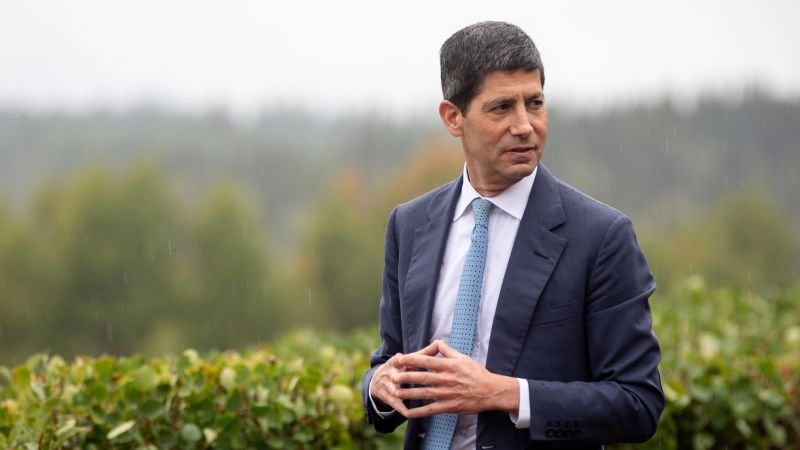
Inflation remains the investors will have to determine for themselves when officials might intervene, Chairman Kevin Warsh noted Friday in remarks prepared for the Jackson Hole, Wyoming, symposium.
The U.S. economy is currently at “full employment,” Warsh stated during the prominent gathering of global central bankers and policymakers, though he added that inflation metrics “are more concerning.”
For over two decades, the sitting Fed leader has typically used the keynote address at the Federal Reserve Bank of Kansas City’s annual economic symposium to signal the future direction of interest rates.
Warsh’s departure from this tradition on Friday highlights a significant shift in his leadership: a reduction in public and market communications regarding the Fed’s future policy path. This has forced traders to navigate a new era of U.S. monetary policy while global pressures—such as government debt, the emergence of AI, and war-related inflation—continue to unsettle financial markets.
“A quieter Fed, more purposeful in its communications, is better able to meet its objectives,” Warsh said Friday.
Meanwhile, inflation has trended upward, and some of Warsh’s colleagues are already advocating for an increase in borrowing costs for the first time since July 2023.
While Warsh did not provide guidance on where rates are headed—or what specific triggers might prompt a change—his assessment that inflation is the more pressing issue is significant.
However, that may not offer sufficient clarity for the markets.
Shortly after Warsh’s post-meeting news conference last month, where he remained silent on interest rates, long-term bond yields spiked. This suggested that traders are worried the Fed may not take enough action to curb stubbornly high inflation.
Rising government deficits and an increased supply of corporate bonds have driven up yields in recent months. Consequently, the federal government faces mounting interest payments, which will only exacerbate its $40 trillion debt burden.
Warsh has not yet provided what is known as a “reaction function.”
A reaction function occurs when a central bank clarifies “what it is watching, how it interprets the economy, how it weighs competing risks, and what developments would change its judgment,” the Brookings Institution explained.
“The bond market is really looking to the Fed for clues on their reaction function,” said Ian Kresnak, senior investment strategist at Vanguard. “What’s driving a lot of the volatility in the rates market is uncertainty around how the Fed is going to respond to inflation.”
A CNBC survey of 31 economists, strategists, and investors conducted this week found that 80% of respondents believe Warsh should provide more detail regarding his economic outlook. Investors view the Jackson Hole event as the ideal venue for him to do so.
Fed officials are currently contending with an uptick in inflation—fueled by tariffs, conflict, and massive corporate investment in AI infrastructure—and are debating whether to implement interest rate hikes in the near future.
However, the U.S. labor market has remained in a sluggish, “low hire, low-fire” state for much of the last two years, complicating the Fed’s dual mandate of controlling price increases while supporting employment.
Recent job growth figures may have been even weaker than previously reported, according to a new document released Friday.
The U.S. economy likely added 79,000 fewer jobs than initially estimated between April 2025 and March 2026, according to the Bureau of Labor Statistics’ preliminary annual benchmark review. If these revised estimates are confirmed, it would lower the job growth figure for that period from 273,000 to 194,000.
Friday’s report does not constitute an official adjustment to employment data. It represents the first phase of a two-step annual process where the BLS reconciles past monthly survey data with quarterly unemployment insurance tax filings to achieve a more accurate employment count.
Warsh remarked on Friday that individuals without investment portfolios are the ones who suffer most when the Fed miscalculates.
“If the Fed gets inflation wrong and judges the economy wrong, who gets the worst of it? Not the financial high-fliers,” he said. “Hard-working Americans are the ones left to deal with inflation that is too high or jobs that suddenly appear less secure.”
Investors currently estimate a roughly 34% probability that Fed officials will raise rates during their September 15-16 meeting, though those odds increase for subsequent gatherings.
“It’s a close call whether or not they hike at all this year,” said Jim Caron, chief investment officer of portfolio solutions at Morgan Stanley Wealth Management.